The baby is swaddled loosely, asleep in a Moses cot at the end of the couch, his froggy legs squat against a white fluffy lambskin rug, gifted to him by an aunt. White noise hums softly from a plastic monkey curled around the handle of the basket. He sighs and shifts peacefully.
In the background, newscasters pick over the bones of the first US Presidential debate – a performance that could be described as bleak, at best. My partner and I trade looks of dismay as I suck down coffee, tired, awake for the third time since one AM, the heavy thud of dread in my chest.
I look at my sleeping son. His skin is so thin I can see blue veins webbed across his nose and eyes. He sighs, puckers his little mouth, tilts his head upward. His hands, miniatures of my own, grasp each other as though clutching at pearls.
At almost four months, my son is already a product of his time. His parents met on a dating app. He met his grandparents via Skype. He was conceived with medical assistance and brought into the world via C-Section. He has two big half-brothers. His parents are not married. He was gestated through the worst fire season in history, born mid-pandemic, late-capitalism in the worst recession since the second world war.
At four months postpartum, I am also a product of my time. While ever grateful for my darling boy, after birthing in a pandemic and living through the events of 2020, I am wired, exhausted, scared. I am marking my rites of passage at a very strange time; permanent bags under my eyes, soft skin and new bulges, a red and uneven scar across my torso. As a new initiate to motherhood I must learn how to parent, how to comfort and remain calm, how to thrive, in a world completely alien to the one I knew as a child. We are, all of us, at a tipping point. With my hands as full as they are with the job of mothering, I don’t know how to contribute.
I think about the year and all it has piled on us. Pandemic. Fire. Unemployment. Recession. Depression. Division. Mass extinction, mass delusion, mass destruction. And there’s a despot running the free world.
2020 is a year of erasure. What a time to arrive on earth.
How does anyone raise a child in this? And what is my place, now, in this strange new role of mother?
…
I learn I am pregnant in October 2019. Soon after, smoke invades Sydney and I joke that we conceived in time for the apocalypse.
I take an Uber to an ultrasound appointment, afraid of breathing ash on public transport. My partner and I watch a little white circle blip-blip-blip on the screen, proof of life. We call my parents, tell them the baby is looking great. They gush excitement from Queensland. We drive through a psychotic orange sky to our home in the harbour city.
…
On 30 December 2019 I find myself in Bega, New South Wales, in the direct path of the fires laying waste to our country. We are here visiting family, celebrating Christmas and the year to come. All week, I have been wracked by a heavy cough. The smoke we hoped to avoid by leaving Sydney is thicker by the day on the south coast. Our plans for a celebration at the Tathra pub are cancelled when we learn the roads have been cut.
Smoke and flames close around Bega. My coughing and vomiting worsen over the ashy night and, fearing being trapped, my partner and I decide to make a run for it. My family stays put. Cobargo, where we lunched and shopped days before, has burnt to the ground.
On the road we learn the Snowy Mountains Highway has been cut by fire. We make a u-turn, head south towards Candelo. Soon we stop at a blockade. A woman hauling a horse in a float coming from where we want to go rolls her window down and tells us we won’t make it through, there’s fire over the road. She wishes us luck and drives towards Bega.
We make another u-turn, backtrack, and turn onto an unsealed road towards Tantawangalo. The forest around us is thick, tinder dry and ready to combust. We pause, consider our options, think about turning back. My partner refreshes the ‘Fires Near Me’ app. The radio is tuned to the ABC; warnings are delivered calmly and firmly, residents told to stay and defend, or leave, or that it is too late to leave and to take shelter. The road ahead is windy, rough and long – and so far, clear of fire. It is the only way out.
Following another sedan, we push on. We drive, smashing M&Ms by the handful. We don’t speak, can’t give voice to our vulnerability, my VW hatch spewing dust in our wake. We’re not alone on the road. We are part of a small convoy of vehicles ill-designed for this rough driving.
WhatsApp messages ping back and forth between us and Bega, and after what feels an age, the rutted dusty road gives way to smooth bitumen. Our convoy of strangers pulls over in Nimmitabel and we file into the bakery for coffee and something sweet. In the bathroom I splash my face with water and see that my hands are shaking.
It takes us nearly nine hours to get home. The sky is alternately grey, orange, brown or red, and always full of ash.
Back in Sydney I am in bed by ten-thirty. I hear the neighbours yell and laugh. The city celebrates nervously, and I cry before drifting off into anxious sleep.
Little do I know that this is the beginning of things, and that the great crises of 2020 will only gather in pace and magnitude.
…
The rain comes and a pandemic comes. We move on to the new crisis. There is only so much I can absorb, so for now, memories of our hellish summer are buried as I join the rest of the world in locking down, sanitising and social distancing.
I call my hospital in March to confirm a visit with a midwife and learn via a pre-recorded message that all antenatal classes have been cancelled.
In March, we are told that the virus will be peaking in July, that hospitals will be overrun. My baby is due in June. I worry, imagining all that could happen and all that could go wrong, not knowing if there will be a hospital bed for me to deliver in. I research home birthing alternatives, just in case.
Schools shut. Toilet paper and baby formula disappear from supermarket shelves. We hoard hand sanitiser, stop going to work, hold birthday parties over Zoom. I attend my first online funeral.
People in supermarkets tell me I should be at home. My doctor wears a mask and gloves when palpating my stomach, checking on the baby’s growth, assuring me that everything will be fine. On the advice of an internet ‘expert’, we washed two weeks’ worth of grocery shopping in soap – including individual strawberries.
We make lists of essentials for the baby and stock up in bulk runs, or over the internet. A steady stream of gifts from friends and family flow through our front door, but they don’t dare visit. I buy a ukulele and practise on the couch with my stepsons. A trip to Officeworks looking for a computer monitor is the highlight of my week – but of course there are none left.
The months before the baby is due disappear in a fog of isolation and panic.
…
Another great crisis crashes against our family, weeks before my due date. My resources disappear overnight. All my plans for my maternity leave are smashed, and I am forced to sell my only asset. It was an unsustainable investment, bought a decade ago on the advice that property will only increase in value. At the time, we had no reason to believe the system would fail.
But here I am, jobless, nine months pregnant, at the beginning of a great recession. I accept an offer on my apartment two days before I go into hospital to deliver my son. It’s the best deal I’ll get at this point in time, and I should take it, I am told. I lose tens of thousands of dollars in one transaction. A week later, I am on the phone to lawyers and bankers, my caesarean scar raw and red, my baby on my chest, trying to feed.
The world has never been as crazy as this. And yet here he is. My miracle amid the chaos. My precious boy.
He comes in the winter, in rain. He comes big and round and screaming. Our world pauses and is filled with love and awe and sweet baby coos, the learning curve steeper than any I have ever climbed before.
He is six weeks old when we realise, we have to move out of Sydney if we are going to make it.
He is eleven weeks old when we lift the last of our detritus into the back of a rented van and wend our way from the city to our new home, ninety minutes to the north – to a large house perched high on a ridge, surrounded by forest.
The baby sleeps as we pack and sweep and haul. My hips ache.
…
It is true what they say: the days are long and the years are short in the raising of a baby. Writing in Mother: An Unconventional History, Sarah Knott describes the early months of infancy as most often a matter of “managing and getting along, of living life on life’s terms”.
“Caring for an infant is hard work. Holding a baby often takes two hands. Those mothering small children are especially unlikely to be game changing in politics, making revolution, pursuing reform or creating literature or art,” she writes.
Remarking on some new piece of baby equipment or a sensory class, older relatives tell me how we have it so much easier than they did.
I nod, bite my tongue, thinking that I just had a baby in a pandemic, with no family support nearby, no fabled village. There’s just us, my partner and me.
I didn’t raise children under the threat of nuclear winter as my parents did, or against the backdrop of the war in Vietnam, as theirs did, or through the horrors of either of the great wars, or all the wars preceding them. I live in a time of great freedom and privilege. I have had a big career and a life defined by things outside of the home.
But I am alone here, and exhausted. I am busy in this new role, and happily so. The concerns of the world weigh on me, and beyond limiting my footprint, I feel there is little I can do to contribute to our great crossroads.
Knott offers an alternative perspective.
“Switch the noun to a verb, the identity of ‘mother’ to the act of ‘mothering’ and the prospect looks very different. A defence of caring under late capitalism, uttered by caregivers of every persuasion – adoptive, biological and employed; female, male, lesbian, gay, trans and the rest – could be a wide coalition indeed. The twenty-first century keeps shifting under our feet.”
Perhaps I am not so alone.
…
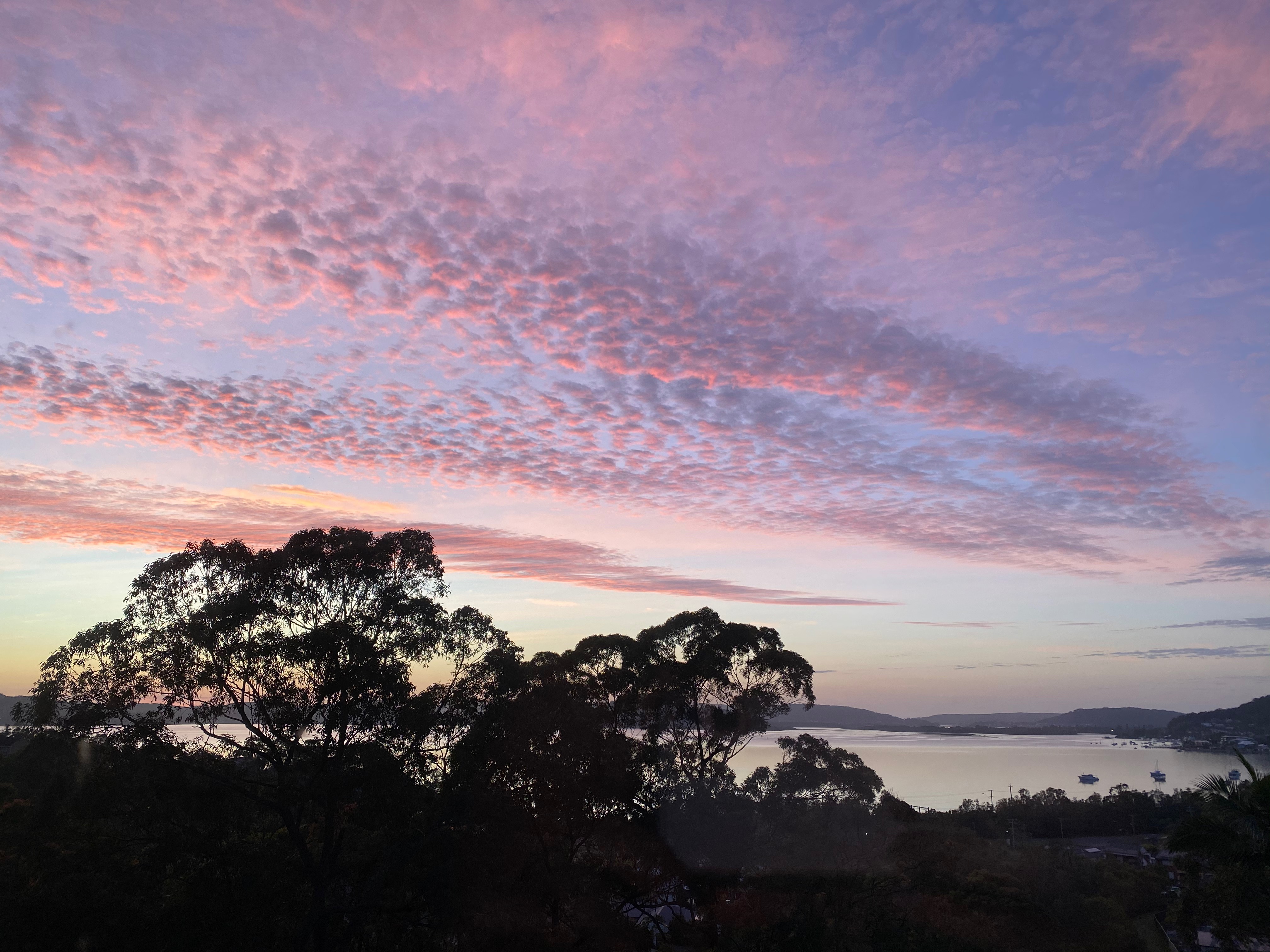
Weeks pass. The spring is fat and verdant. I drive around bend after green bend, ferns catching filtered light, wet and lush. Where we live now, away from the city, there are wildflowers bursting on the verges. We stop to look at waratahs by the side of the road.
The fires will come again, I am sure. Perhaps this too will burn, and we will need to flee. I mentally catalogue our home, sorting through what we should save if we can.
Even among the abundant green I imagine the bush burning, the smoke in my nostrils, the crackle and pop of trees falling.
We will live here in this oasis in the trees for as long as we can. Gradually, our muscles unknot, and we breathe the cleaner air slowly, deeply.
For now, we watch the kookaburras swoop and glide, give names to the many spiders spinning silken nets across our path, yell at snakes slipping through grass we need to trim.
A Christmas beetle bounces into our living room, knocking against the ceiling until it reaches a lamp shade.
“What’s that?” my stepson asks.
I smile, give it its name, explain that they used to come around this time of year when I was a kid. “We stopped seeing them in the city,” I say, “but we used to see them all the time.”
My stepson shrieks and cringes when I put the beetle on the back of his hand.
“Are you scared?” the other asks.
“No!” I exclaim. “I’m so happy that they’re still here.”
I launch the beetle over the balcony into the air, oily wings flashing.
…
It is November. The results of the US election are streaming in steadily on every channel. We watch nervously, the wheels of change rolling ever forward, the machinery of democracy clunking into gear.
Our almost-five-month-old plays on the floor, kicking his long limbs, testing out new squeals and laughs as he tries to interact with the faces on the screen in front of him. He is happy, growing, oblivious to all but his immediate needs.
Nothing is guaranteed. There is so much to fix, so much to stop doing and to challenge.
The baby is here, he is loved, he is part of the fabric of this world. I join generations of parents and carers before me in raising him in uncertain times, knowing I will do everything in my power to give him the best of life no matter the circumstances, no matter how bleak the world is. I will teach him to tread lightly, to marvel, to listen and to leave be.
Later, we sit together and watch the sunset, listening to sounds I didn’t know I had missed: frogs chorusing, kookaburras cackling, the sway of trees in wind. A flock of corellas wheels past and I point to cockatoos high on the ridge.
The baby turns his head into my arm, blows a raspberry. I breathe in his milky scent, pulling him closer.
There it is: hope.
NB: The title of this essay is taken from John Steinbeck’s East of Eden


 Nicole Holyer
Leave a reply to soniahoffmann Cancel reply